The Bird that loved flower It went on its way Flapping wings of feather hoping not being prey It fought out it’s flock Never but found a nest Seasons that fall out of clock Trying best to rest
The Bird that loved flower On her way , fell into a lil trap they say struggled up hard to keep An heart as hunter slayed Birdie kept singing to keep , Her breath alive , hoping Someday some savior’ll come ,
The Bird that loved flower Kept tweeting her song Weeping for love and hugs Wishing some time will Rest at her garden home Warm and comf Hand of Child that heard her Sing , took out the birdie Into his arms , running for life Like nobody else
The Bird that loved flower Was last at trust Feared of flight , Coward Child slayed up Birdie’s wings , Never to fly the birdie sung In the arms of the child She could barely breath
The Bird that loved flower Sung up its lung Cowardy Child Left Birdie in wailing pain Opened up eyes and It looked around Finally found her flower town
The Birdie that loved flower Forgot her pain , forgot her past Kept peeping into every flower .
Journey of a Virtuous child and his journey to righteousness .
Summary
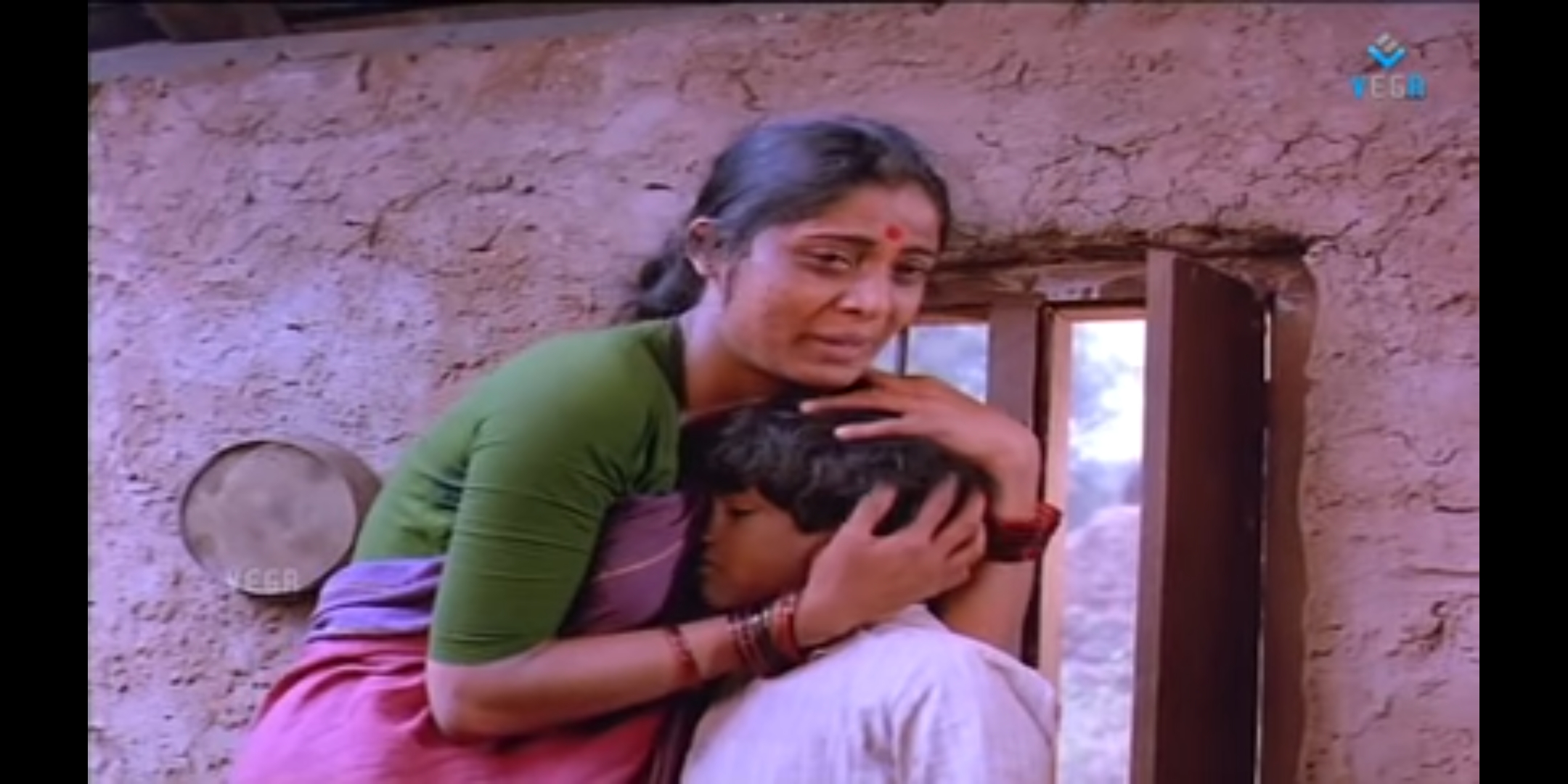
Ramu is a virtuous child , who comes across the daily struggles of life and has a passion to acquire knowledge and understanding about the world . Ramu desires to buy himself a ‘ Ramayana ‘ , saves money to buy it , and even though coming across various financial crises stays determined on fulfilling his dream . Conquering his fears and helping others on his way . At the end of collecting the money he needs to acquire the book he wants , he decides to buy a Blanket the family needs . By doing this he gains all knowledge he could acquire from the book ‘ Ramayana ‘ , although he weeps in the sorrow of him not being able to buy the Book he wished for not knowing that the knowledge of the book he wished for has always been in him.
Conclusion
Story of every child and man who wishes to achieve his or her dream. The mountain flour teaches us to be useful to the ones around us and to be righteous on our way to our dreams and what we wish to have is already in us . That what we choose to acquire should be the knowledge about righteousness in the book rather than the book itself.
Special Mentions
The child actor Late Puneeth Kumar , shows the maturity of a young man flawlessly for the time . The laidback well poised camera movement and composition by B.C Gowrishankar , and the story telling of N.Lakshminarayan . Adapting the story ” What then , Raman ? ” By Shirley L. Arora .
" What do you think ,
did Ramu get the Ramayana ? "
Saul Leiter (December 3, 1923 – November 26, 2013) was an American photographer and painter whose early work in the 1940s and 1950s was an important contribution to what came to be recognised as the New York school of photography.
Introduction
Saul Leiter a working photographer , who mainly did fashion and commercial photography and painting as his livelihood . He was a commercially he shot Black and white mainly and very muted colours . As he was known for .
Although , he used to conduct his personal photography exploration with various film types and colour film which earned him alot of respect for him pushing the fine art and street photography to a different direction.
Perspective on street photography
Saul Leiter believed in not to medel with the environment and the frames he shoots . To be a observer and to capture it at its absolute authenticity, It gives the subject , a character of liveliness and authentic expression . His use and experiments of colour gives it a much more dramatic expression .
Mystery , Silence and Error
In all the photos by Saul Leiter the three elements correlate to each other to creat a new and living still image . The elements of motion can be in the form of reflection of a passing vehicle , raindrops dripping , the wind blowing , etc. The etiquette of a street photographer is to keep the subjects who are not interested in the art or the person taking the photo to be unrecognised or to be hidden , although Saul Leiter being a introvert , he used it to its fullest to create mystry and to make more related to all . He uses siloutes of people or taking them completely as possible to not to ruin the art he wishes to creat . He showcases his Mastery of using shadows , depth of field , blocking , film flaws and scratches to build his image rather than being a hinderence for his work. It evolved into his style and seamlessly integrated itself in the form of artistic expression .
Colour & Contrast
For the time when colour Photography was still a subject of debate , Saul Leiter used it to create understand light and to create drama using along the values and understanding of contrast in light , but also to use the colour contrast to its fullest experimenting with different colour values to create dramatic stories . His experience in use of expired or heated film gave him a better understanding of the working and use of the film and the tools he used . He pushed the art form to create a new and interesting ideas to creat his frames which he used mindful into his commercial photography.
The use of colours that tells the story in its own sense has always been at the back of his mind which truthfully is expressed in the images created by Saul Leiter .
Framing the Composition
Lines of references , frame with in a frame , subject isolation , leading lines and foreground patterns are the major styles of Saul Leiter . In his frames he uses his depth of field as a element of composition as well . Unlike many other photographers he used a much more organic or skewed lines and framing to give it a imperfect perfection than from geometric shapes and structure . He uses shadows to isolate the subject from the picture which is also his part of style that creates Mystery to the frame that makes us think about the unseen part of the picture . Saul Leiter lets us as the spectators use our imagination to question the unseen and keep the mystery alive . Being a abstract artist his use of authenticity even playes a big role in his abstract photography , where he makes photographs that look like painting and creates a texturised photograph.
Conclusion
When it comes to Saul Leiter and his Photographs . He honed the unexplored in silence , and made his work speak for itself . The photos express strong and dramatic feelings and emotions in the most beautiful and authentic way , embracing the evolution of colour and pushing it to its limits for his curiousity has helped a whole lot more of artist to be able to see and experience the world through his view .
An Critical analisys of popular Photographer : Saul Leiter
Tyger! Tyger! burning bright In the forests of the night, What immortal hand or eye Could frame thy fearful symmetry?
In what distant deeps or skies Burnt the fire of thine eyes? On what wings dare he aspire? What the hand dare seize the fire?
And what shoulder, & what art, Could twist the sinews of Thy heart? And when Thy heart began to beat What dread hand, & what dread feet?
What the hammer? What the chain? In what furnace was thy brain? What the anvil? what dread grasp Dare its deadly terrors clasp?
When the stars threw down their spears, And water’d heaven with their tears, Did he smile his work to see? Did he who made the Lamb make thee?
Tyger! Tyger! burning bright In the forests of the night, What immortal hand or eye, Dare frame thy fearful symmetry?
Introduction :
The poem ‘ Tyger ’ written by William Blake , is a very popular portion of his book ” Songs of Experience ” . William Blake being a French revolutionist , his values from life is been portrayed heavily about religion and the submission towards a higher power .
Analysis :
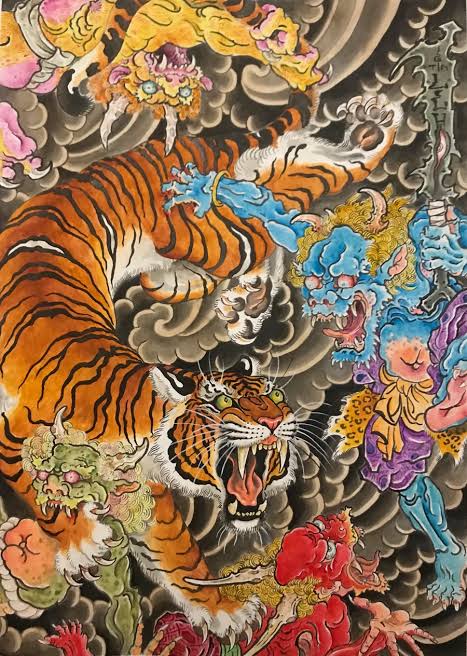
The artistry of the poet begins with him spelling ‘ Tiger ‘ as Tyger , it follows the old English where the spelling of tiger wasn’t established . Giving the reader an uneasy feeling about the creature and showing its ancient roots that the creature has been frightened for years . The repetition of the word tyger twice is to register the name onto us . And for us to be startled by the feeling of referring the extraordinary . The tigers having a bright orange colour with the dark strips give an idea of a creature fiercely covered with fire giving it an out of the world representation. Even in the darkest of the forest and the dangerous of the situation the tiger stands fiercely and strong . ‘ Immortal ‘ word is disguised to show the power and indestructive nature of the creature , that uses its sharp eyesight and strong paws that can see all creatures even in the dark and paws that can grab anything that it can see . To show the potential of the creature that can destroy anything that it can see . Although the tiger being so fierce as portrayed in the first three lines , the poet adds yet how beautifully symmetrical and unavoidably beautiful it is . It refers to the fear of sin being as dangerous it is people yet falling into the cycle of sin . For the tiger to see it with its eyes and to grab the people and never let them go .
Again bringing the readers to its eyesight that can reach the depth of the darkest places and the highest of the places that cannot escape its eyesight , expressing the inability of its prey to escape the anger and hunger the tiger possesses that can be seen through its eyes , to its prey, the poet expresses that there’s no way out of its eyesight and reach that no prey can escape its clutches. The indestructible type of creation the tiger is it cannot be approached ay anyone that even wish to get to it . The poet references the tiger to be like fire that cannot be touched by anyone without being affected by its heat here being the anger of the tiger .
Here the poet expresses how the structure of the strong creature is spreading fear among the ones who see it for being as beautifully unavoidable and dangerously strong it being. For even the one who created the tiger would be afraid of the creature would tremble the creator .
How did the creator shaped the creature that’s so strong , how did the creator control it’s fierceness . Also mocking the creator for creating a creature without understanding its power to destroy . Even for the tools he took for the shaping of the creature , questions the power the creators’ hands had to make this creature . And reason to have made this happen that could even harm the creator.
Here the poet questions the creator taking pleasure in seeing the people suffer from its creation ,the same creator who made others weaker and in larger numbers that he didn’t care for the people or was it just for him to enjoy the amusement of seeing us suffer . That didn’t he know we could be harmed by the tiger .
Here the poet questions the creator directly who could have made the creature so fearful and scary that he himself became a creator who is like the tiger who is full of anger to its people . Calling him the Tyger himself . Giving us the opportunity to question whether the creature created is having the same features as the tiger , fierce , full of anger and the one who holds the strength to destroy .
References
Tiger – a Monsterous creature depicted in Chinese mythology. | symbol of majestic demon
Lamb – People of God (Christian culture)
Anvil – a tool used in English culture to shape metal also the symbol of stability.
Figures of speech :
Tyger! Tyger! burning bright – Transferred Epithet “burning bright” , Alliteration – repetition of Letters b for bright and burning.
In the forests of the night – Anaphora – ‘ the ’ is used twice ,
Conclusion :
The creator describes the creature to have the same potential as the Tiger , who is feared by the people and strong and yet loved and feared by its people who can’t avoid but to be also feared at the same time .
Analysis
By Jovinjith Kennedy , BSc. Digital Filmmaking .
Assignment by Mr.Balu Depavath , English GE




 World of Jo